PROJECT DESCRIPTION

A fan-augmented ground-effect vehicle project developed as a physical platform for generating, validating, and demonstrating proprietary IP in next-generation downforce, active chassis control, and force-aware vehicle systems.

Two prototype platforms—Brynhildr and Sigrún—serve as engineering demonstrators and validation assets. Select investors may optionally acquire a vehicle through separate commercial transactions, independent of any project investment.

The project is designed so that the driver, the vehicle, and the engineering team share a common understanding of what the car is experiencing—where it is loaded, how forces are being carried, and how the system responds at the limit. Performance is not only achieved, but felt, interpreted, and refined through a unified language of forces.

The vehicles are authored as complete systems, where performance emerges from the orchestration of forces rather than from isolated components.

“Valkyries exists to validate controllable, speed-independent downforce and force-aware vehicle control in real-world conditions—not simulations.”
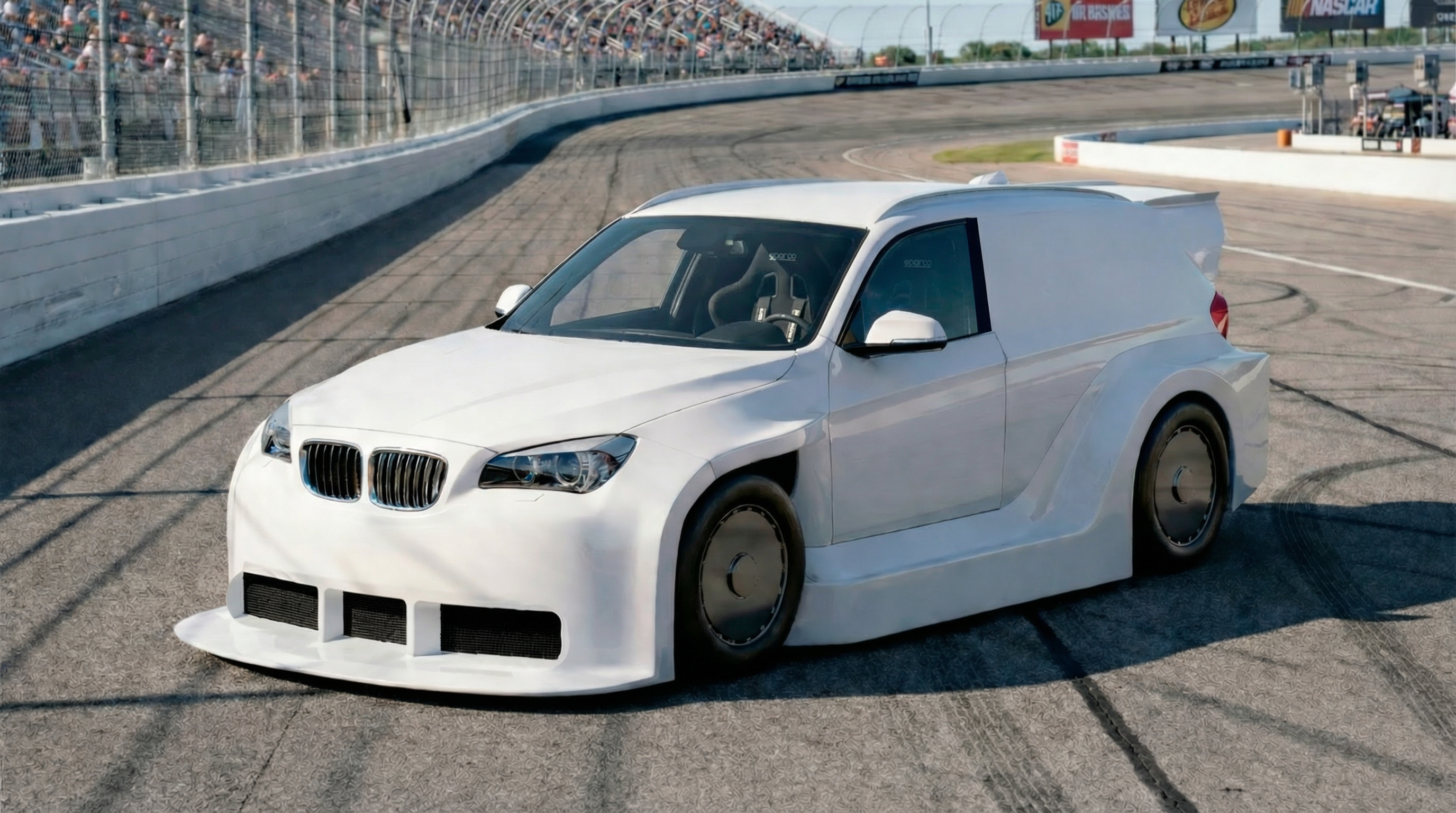

E84 (1st-gen X1) Platform
E84 platform render (Brynhildr)
E91 (3 Series Touring) Platform
E91 platform render (Sigrún)
“Renders shown represent design intent; final vehicle details will evolve during development.”
ᛒᚱᛁᚾᚺᛁᛚᛞᚱ
Brynhildr

A compact-bodied platform with upright packaging and an expanded ride-height envelope, enabling aggressive experimentation in underbody aerodynamics, fan duct routing, and suction plenum control.

Optimized as a high-observability grip demonstrator, Brynhildr emphasizes extreme downforce, traction-limited launches, and short-format exhibitions where system behavior, load paths, and control responses are intentionally legible, instrumented, and repeatable.

ᛋᛁᚷᚱᚢᚾ
Sigrún

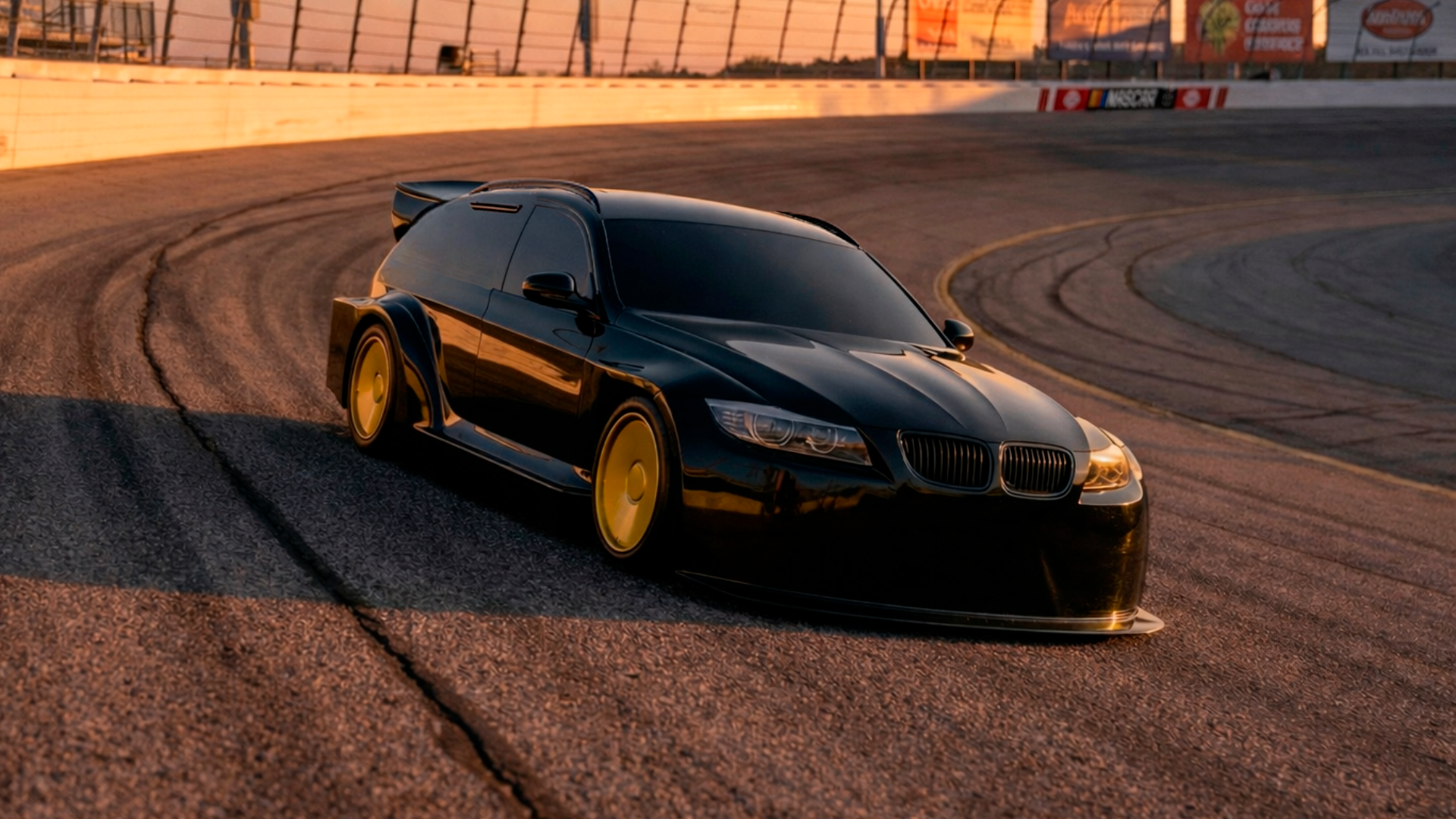
A lower-roofline touring-derived platform optimized for high-speed stability, sustained operation, and Nordschleife-relevant validation, prioritizing thermal robustness, aero consistency, and long-duration controllability.

Sigrún focuses on aerodynamic balance, inertial management, and force continuity across extended operating windows—serving as the project’s primary endurance and real-venue validation asset.
ENGINEERING HIGHLIGHTS
AERODYNAMICS & DOWNFORCE SYSTEMS
Adaptive Skirt & Suction Plenum System
Adaptive skirt modules manage ground clearance and leakage across real track surfaces, improving plenum stability and suction consistency versus fixed-skirt designs.
Fan-Augmented Underbody Aerodynamics
High-volume electric fans generate controllable, speed independent underbody suction, supporting extreme low-speed grip and repeatable demonstrations.
Adaptive Aerodynamic Control
Plenum ΔP, ride height, and IMU data enable closed-loop suction control and real-time estimation of aerodynamic state for coordinated fan, chassis, and suspension response.
CHASSIS, SUSPENSION & VEHICLE DYNAMICS
Tilting Chassis System (TCS)
Actively tilts the chassis into corners while preserving suspension pickup geometry relative to the wheels, minimizing unintended camber or toe change.
Double-Wishbone Conversion (Front & Rear)
Motorsport-grade geometry enables robust heave/roll separation and precise ride-height control—critical for maintaining stable plenum gap and aero balance.
Electromechanical Inertial Elements
Actively manage high-frequency vertical and pitch response, reducing sensitivity to bumps, curbs, and transient load transfer events.
Instrumented Load Paths
Key suspension members are designed to accept in-line force measurement, providing real-time insight into how vertical and lateral loads are carried through the chassis during operation.
INTAKE, BOOST & THERMAL SYSTEMS
Integrated Boost & Charge-Conditioning Architecture
Naturally aspirated baseline operation is supported for validation. In boosted operation, an electronically clutched supercharger provides low-RPM response while electric turbos supply high-RPM airflow.
Liquid-Cooled A2W Merge-Hat
Charge conditioning and gas exchange are actively managed across operating modes to stabilize response, efficiency, and cylinder balance under transient load.
Zoned Thermal Management & Wake Control
Front low-temperature circuits support charge conditioning and turbo intercooling, while rear thermal modules handle heat rejection and auxiliary loads.
POWERTRAIN & ENERGY ARCHITECTURE
Primary + Auxiliary Engine Architecture
An endurance-optimized V8 architecture provides primary propulsion, with engine configuration tailored to each platform’s operating envelope. A secondary billet Boxer-6 drives a generator supplying electrical power for fan systems, chassis actuation, control electronics, hybrid assist, and regenerative braking.
Hybridized Electrical Backbone
Generator and buffer battery smooth electrical transients and ensure consistent control authority independent of engine RPM.
Adaptive AWD Driveline
A mechanically robust AWD architecture enables real-time torque redistribution between axles in response to vehicle state.
“Architected for steady-state duty, deterministic control authority, and endurance operation rather than peak transient output.”
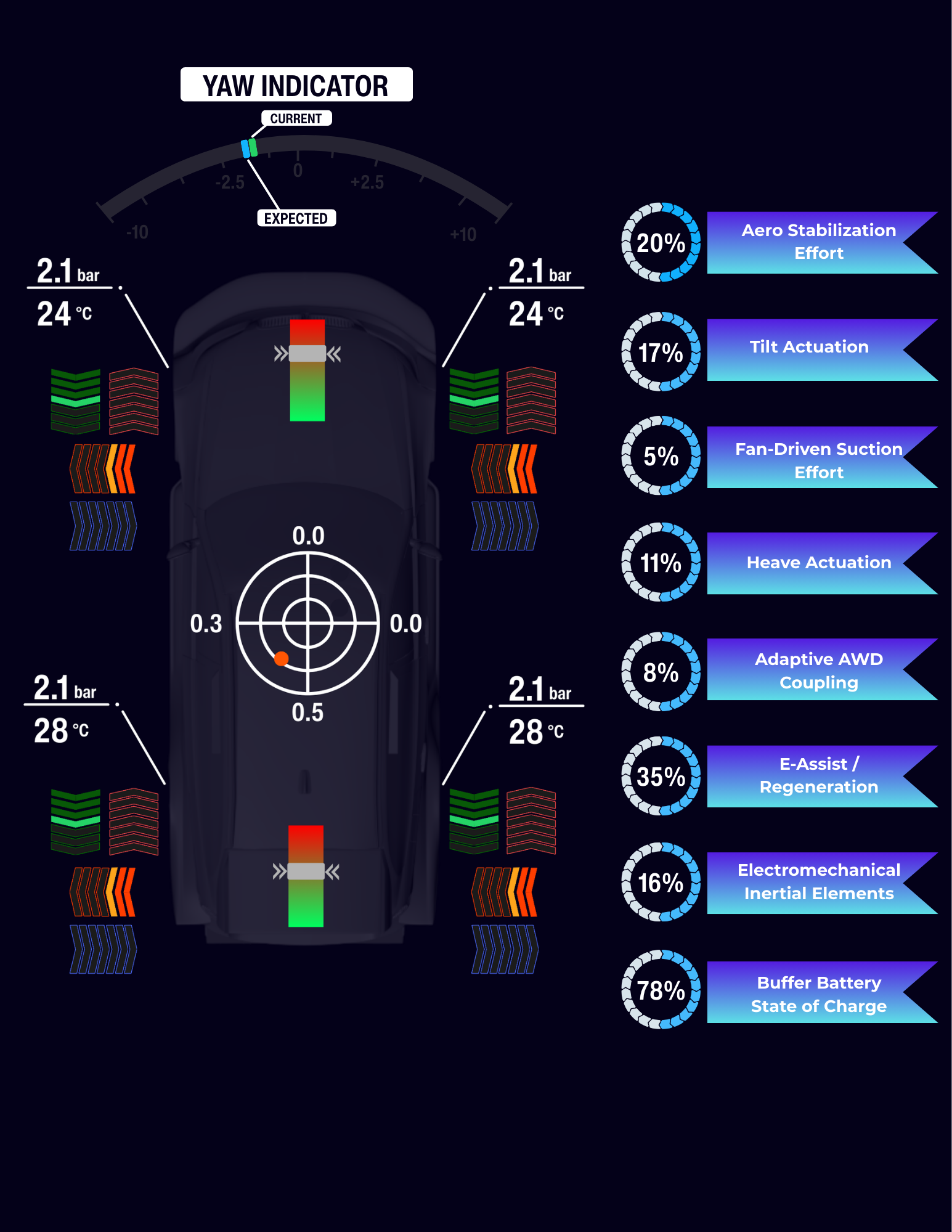
FORCE HUD PREVIEW
HUD visuals shown are illustrative and will evolve during development.
VEHICLE SYSTEMS DIAGRAM
Project Economics & Returns
LIST PRICE: ~$900K–$1.1M
(varies with spec/COGS)
Target gross margin: 30–35%
INITIAL HALO RUN
3 builds (option to expand 4–8 based on demand, facilities, sponsor activations)
RAISE (Project SPV)
Target Size: $4.0–$5.0M into Project SPV (base case for 3 builds + NRE/tooling/testing/contingency)
Participation in the Project SPV does not require vehicle purchase, and vehicle purchase does not require SPV investment. Some anchor investors may elect to acquire a vehicle as a separate, arm’s-length transaction.
Funds prototype construction, non-recurring engineering, tooling, testing, and contingency, while creating a licensable IP base and exhibition asset platform.
Top-tier motorsport and advanced vehicle programs routinely spend tens to hundreds of millions annually on external engineering, simulation, aero development, controls, and specialized technology partners. The project targets this existing spend by creating validated, transferable system architectures that can be licensed or adopted without customers bearing the cost and risk of full-platform exploration.
“Returns are driven by IP licensing, strategic technology partnerships, sponsored demonstrations, and selective asset sales—not vehicle production volume.”
TIMELINE
Project phases are structured around asset creation, validation, and commercialization readiness.
  • Q1 2026 — Capital formation, supplier engagement, detailed engineering, and long-lead component procurement
  • Q3 2026 – Q3 2027 — Prototype fabrication, integration, instrumentation, and validation testing
  • Q3 2027 — Public reveal and exhibition launch Preferred venue: America On Wheels Museum (Allentown, PA) Optional timing alignment: SEMA 2027
  • 2027–2028 — Demonstrations, events, record attempts, and licensing discussions
Org Diagram
WAGNER ADVANCED GROUP SYSTEMS IP HOLDINGS, LLC
Long-lived IP holdco owner of patents, proprietary architectures, control algorithms, and selective technical publications.
IP license / royalty
WAGNER VALKYRIES SPV LLC
Project-specific entity funding prototype builds, testing, and demonstrations.
Capital (calls) / Returns
MSA / SOW / Milestones
NICK WAGNER AUTOMOTIVE GROUP SYSTEMS LLC (NWAGS)
Operations, manufacturing coordination, and project execution.
Corporate entities are intentionally separated to isolate prototype and operational risk, protect core intellectual property, enable selective publication of research and technical white papers, and maintain a clean and transparent capital structure for investors and strategic partners. This structure separates three roles:
  1. Investors fund a finite, asset-creation project via the SPV,
  2. NWAGS executes engineering under arm's-length service agreements, and
  3. Downstream customers/licensees engage with validated IP and architectures without owning or operating the platform.

Book a 30-Minute Diligence Call
Discuss technical specifications, project structure, and investment terms
Schedule Now
QR code to schedule diligence call